
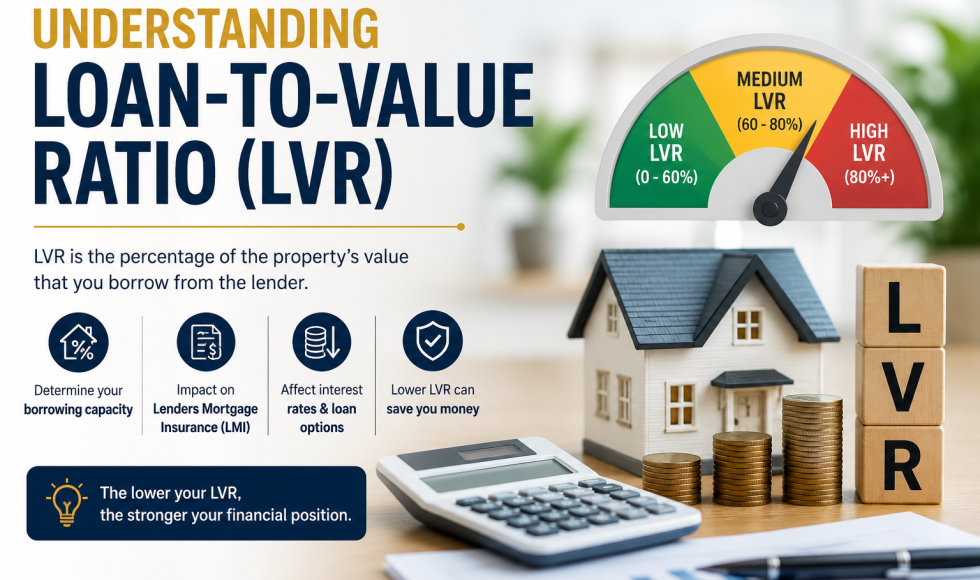
Understanding Loan-to-Value Ratio (LVR): What It Means and Why It Matters.
Introduction
If you’re applying for a home loan, refinancing an existing mortgage, or purchasing an investment property, you’ll likely come across the term Loan-to-Value Ratio (LVR).
While it may sound like a technical banking term, LVR is one of the most important factors lenders use when assessing home loan applications.
Your LVR can influence:
- Whether your loan is approved
- How much you can borrow
- Whether you need to pay Lenders Mortgage Insurance (LMI)
- The interest rates available to you
- Your refinancing options
Understanding LVR can help you make smarter borrowing decisions and potentially save thousands of dollars over the life of your loan.
In this guide, we’ll explain what LVR is, how it works, why lenders use it, and how you can improve your LVR position.
What Is Loan-to-Value Ratio (LVR)?
Loan-to-Value Ratio (LVR) measures the size of your home loan compared to the value of the property being used as security.
Put simply:
LVR shows how much of the property’s value is being financed by the lender.
The higher the LVR, the greater the lender’s risk.
The lower the LVR, the lower the lender’s risk.
How Is LVR Calculated?
The formula is simple:
LVR = Loan Amount ÷ Property Value × 100
Example 1
Property Value: $800,000
Loan Amount: $640,000
Calculation:
$640,000 ÷ $800,000 × 100
LVR = 80%
Example 2
Property Value: $900,000
Loan Amount: $810,000
Calculation:
$810,000 ÷ $900,000 × 100
LVR = 90%
Example 3
Property Value: $1,000,000
Loan Amount: $700,000
Calculation:
$700,000 ÷ $1,000,000 × 100
LVR = 70%
Why Is LVR Important?
Lenders use LVR to assess the level of risk associated with a loan.
A borrower with a larger deposit represents less risk because they have more equity in the property.
A borrower with a smaller deposit represents greater risk because there is less equity available if property values fall.
As a result, LVR can influence several aspects of the loan application process.
Common LVR Thresholds
While lender policies vary, the following thresholds are commonly used:
| LVR | Typical Lending Position |
|---|---|
| 60% or less | Very low risk |
| 70% | Low risk |
| 80% | Preferred threshold |
| 85% | Higher risk |
| 90% | Higher risk and possible LMI |
| 95% | Significant lender risk |
| Above 95% | Limited lender options |
Generally speaking, the lower the LVR, the more lending options may be available.
How LVR Affects Your Home Loan
1. Lenders Mortgage Insurance (LMI)
One of the most significant impacts of LVR relates to Lenders Mortgage Insurance.
Many lenders require LMI when:
LVR exceeds 80%
For example:
Property Value: $800,000
Deposit: $80,000
Loan Amount: $720,000
LVR = 90%
Because the borrower is contributing only 10%, LMI may apply.
A larger deposit may help avoid this additional cost.
2. Loan Approval
Higher LVR loans often involve greater scrutiny.
Lenders may assess:
- Income stability
- Employment history
- Credit profile
- Savings history
- Overall financial position
Borrowers with lower LVRs are generally viewed more favourably because the lender’s risk is reduced.
3. Interest Rates
Some lenders offer more competitive rates for lower LVR lending.
For example:
- Borrowers at 60% LVR may qualify for premium pricing.
- Borrowers at 90% LVR may have fewer pricing options.
The difference may seem small, but even minor interest rate variations can create significant savings over a 25–30-year loan term.
4. Refinancing Opportunities
LVR also plays an important role when refinancing.
A stronger equity position can provide:
- More lender choices
- Better interest rates
- Increased negotiating power
- Additional borrowing options
Understanding Equity and LVR
Equity and LVR are closely connected.
Equity
Equity is the portion of the property you own outright.
Formula:
Property Value – Loan Balance
Example
Property Value: $900,000
Loan Balance: $600,000
Equity: $300,000
LVR:
$600,000 ÷ $900,000 × 100
LVR = 66.7%
As equity increases, LVR decreases.
This is generally viewed positively by lenders.
How Property Value Changes Affect LVR
Many borrowers assume LVR only changes when they make repayments.
However, property values also influence LVR.
Property Value Increases
Property Value: $800,000
Loan Balance: $640,000
LVR = 80%
If property value increases to:
$1,000,000
LVR becomes:
$640,000 ÷ $1,000,000 × 100
LVR = 64%
The borrower now has a stronger equity position.
Property Value Decreases
Property Value: $800,000
Loan Balance: $640,000
LVR = 80%
If the property value falls to:
$700,000
LVR becomes:
$640,000 ÷ $700,000 × 100
LVR = 91%
This increases lender risk and may affect refinancing opportunities.
What Is a Good LVR?
There is no single “perfect” LVR.
However:
Below 80%
Generally considered a strong position.
Potential benefits include:
- Avoiding LMI
- More lender options
- Better pricing opportunities
Below 70%
Often viewed very favourably by lenders.
Above 90%
More challenging, but still achievable depending on lender policies and borrower circumstances.
Can First Home Buyers Have a High LVR?
Yes.
Many first home buyers purchase property with:
- 5% deposit
- 10% deposit
This results in higher LVR lending.
While LMI may apply, government assistance programs may help eligible buyers enter the market with smaller deposits.
How to Improve Your LVR
Save a Larger Deposit
The simplest way to reduce LVR is to contribute a larger deposit.
Example:
Property Price: $800,000
10% Deposit = 90% LVR
20% Deposit = 80% LVR
Pay Down Existing Loan Balances
As loan balances reduce, LVR naturally improves.
Increase Property Value
Property improvements and favourable market growth can increase equity and reduce LVR.
Avoid Excessive Borrowing
Borrowing only what you need may help maintain a healthier LVR position.
Common LVR Mistakes
Focusing Only on Deposit Size
Many borrowers don’t realise LVR affects much more than loan approval.
It can influence pricing, lender options, and future refinancing opportunities.
Ignoring Property Valuations
A lender’s valuation may differ from the purchase price.
This can affect your final LVR calculation.
Assuming All Lenders Have the Same Policies
Different lenders have different risk appetites and LVR requirements.
Borrowing to the Maximum Available Limit
While higher borrowing may be possible, it may also increase costs and reduce flexibility.
Frequently Asked Questions
Is 80% LVR Important?
Yes.
Many lenders use 80% as a key threshold for LMI and risk assessment.
Can I Get a Loan with 90% LVR?
Yes.
Many lenders offer high-LVR loans, subject to eligibility requirements.
Does Refinancing Require an LVR Assessment?
Yes.
Lenders typically assess current property value and loan balance when evaluating refinance applications.
Is a Lower LVR Always Better?
Generally, a lower LVR provides more flexibility and reduces lender risk.
However, waiting years to achieve a lower LVR may not always be the best financial strategy.
Why Understanding LVR Matters
Whether you’re:
- Buying your first home
- Upgrading to a larger property
- Refinancing
- Building an investment portfolio
LVR is one of the most important metrics in mortgage lending.
Understanding how it works allows you to:
- Plan your deposit strategy
- Estimate potential LMI costs
- Improve refinancing opportunities
- Strengthen your overall borrowing position
The Bottom Line
Loan-to-Value Ratio is much more than a lender calculation.
It influences borrowing power, loan costs, lender options, refinancing opportunities, and long-term financial flexibility.
A strong LVR position can open doors to better lending outcomes, while understanding high-LVR lending can help buyers enter the market sooner when appropriate.
Before applying for a home loan, it’s worth understanding how LVR affects your situation and what strategies may be available to improve your position.
Need Help Understanding Your Borrowing Position?
At Suncrest Finance, we help clients understand key lending concepts such as LVR, borrowing capacity, deposits, refinancing opportunities, and lender requirements.
Whether you’re buying your first home, refinancing, or investing in property, we can help you navigate the process and identify lending solutions aligned with your goals.
Contact Suncrest Finance today for a complimentary consultation and personalised lending assessment.